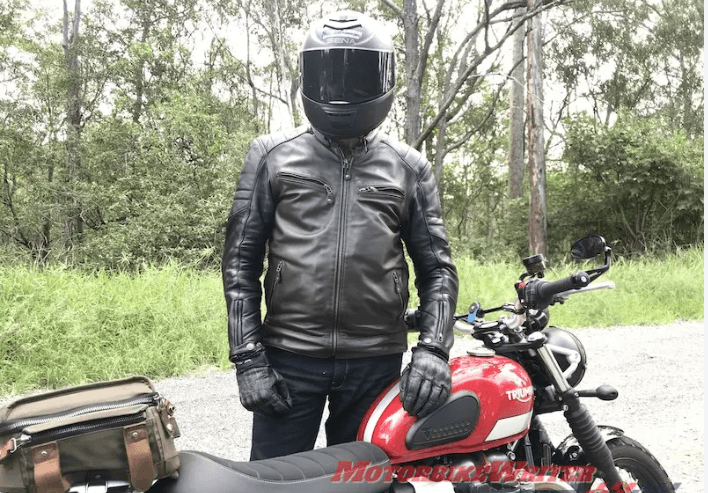
A motorcycle leather jacket should move with the rider without pulling across the shoulders, restricting the elbows, riding excessively up the back, or bunching around the waist. The jacket should remain secure at speed while still allowing natural movement when reaching the handlebars, turning the upper body, operating controls, and changing riding position.
Motorcycle jackets are not meant to fit exactly like casual leather outerwear. Riders sit with their arms extended, elbows bent, shoulders slightly forward, and torso positioned according to the motorcycle.
That means movement is one of the most important things to evaluate when choosing men’s leather motorcycle jackets.
A jacket that feels comfortable while standing may become restrictive as soon as the rider reaches toward the controls. The right jacket should support the riding position instead of forcing the rider to work against the leather.
Why Does Motorcycle Jacket Movement Matter?
Motorcycle riding requires continuous small movements.
Even during a steady highway ride, a rider may:
- Turn the head and shoulders
- Reach toward controls
- Bend and straighten the elbows
- Adjust hand position
- Shift body position
- Lean slightly into turns
- Look over the shoulder
- Move during stops
A jacket that restricts these movements can become uncomfortable and distracting.
Poor movement can also affect how other riding features perform.
For example, a restrictive sleeve may move elbow armor out of position, while a tight upper back may pull the entire jacket upward.
The best motorcycle jacket combines security with controlled mobility.
How Should the Shoulders Move in a Leather Motorcycle Jacket?
The shoulders should move forward naturally when the rider reaches for the handlebars.
A common problem with casual leather jackets is excessive tension across the upper back.
When the arms extend forward, the shoulder blades naturally move apart. If the jacket does not allow this movement, the leather pulls tightly across the back.
Riders may feel:
- Shoulder pressure
- Upper-back tension
- Tightness across the chest
- Resistance while steering
Motorcycle-specific construction can reduce these problems.
Useful features may include:
- Action backs
- Shoulder gussets
- Flexible rear panels
- Riding-oriented sleeve construction
These features give the shoulders room to move without making the entire jacket excessively loose.
What Is an Action Back?
An action back is a jacket construction feature designed to increase movement around the shoulders.
It typically uses overlapping or expanding panels near the upper back.
When the rider reaches forward, these sections open slightly and provide additional mobility.
When the rider returns to a relaxed position, the panels move back into place.
An action back can be especially helpful for:
- Cruiser riders
- Touring riders
- Riders with wider handlebars
- Riders with broader shoulders
- Long-distance riding
The purpose is controlled flexibility.
The jacket stays fitted through the torso while creating extra movement only where it is needed.
How Should the Sleeves Move While Riding?
Motorcycle jacket sleeves should follow the natural bend of the rider’s arms.
When the elbows bend, the sleeves should not become excessively tight or pull the shoulders forward.
Riding-oriented jackets may use:
- Pre-curved sleeves
- Articulated elbows
- Multi-panel construction
- Gussets
- Adjustable cuffs
These features help the sleeve maintain its shape in the riding position.
The rider should be able to bend the elbows fully enough to operate controls without feeling resistance.
Why Do Pre-Curved Sleeves Improve Movement?
Pre-curved sleeves are shaped closer to the position riders naturally use on a motorcycle.
Instead of starting completely straight, the sleeve includes a slight bend around the elbow.
This reduces the amount of stretching and folding needed when the rider reaches forward.
Benefits can include:
- Less elbow tension
- Reduced shoulder pulling
- Better wrist coverage
- Less material bunching
- Improved arm mobility
The longer the ride, the more valuable this can become.
Small resistance around the elbows may not feel significant during a short trip but can become irritating after several hours.
How Should the Jacket Move When You Reach the Handlebars?
When reaching the handlebars, the jacket should remain relatively stable through the torso.
Some movement is normal, but the entire jacket should not shift dramatically upward or forward.
Check whether:
- The shoulders remain comfortable
- The collar stays in place
- Sleeves cover the wrists
- The lower back remains covered
- The chest does not become excessively tight
If the jacket pulls significantly toward the front, the shoulder or sleeve construction may not match the riding position.
The goal is to allow the arms to move independently without dragging the entire garment with them.
Should a Motorcycle Leather Jacket Feel Tight?
A motorcycle leather jacket should generally feel secure, but secure is not the same as restrictive.
Leather may soften and conform somewhat with use, but riders should not depend on extreme break-in to correct poor fit.
A properly fitted jacket should allow:
- Normal breathing
- Full arm movement
- Comfortable elbow bending
- Shoulder rotation
- Intended layering
- Space for armor if used
If the rider cannot comfortably reach the handlebars during the initial fit test, the jacket is unlikely to become ideal simply because the leather eventually softens.
How Should the Back of the Jacket Move?
The back should maintain coverage while allowing the rider to lean and reach forward.
A motorcycle jacket that is too short may rise above the waist when the rider bends.
This can expose the lower back to:
- Wind
- Cold air
- Road debris
A slightly longer rear section can help maintain coverage.
However, too much material can also create bunching.
The jacket should stay relatively flat across the lower back while seated.
How Much Jacket Movement Is Too Much?
A small amount of movement is normal.
The jacket should adapt as the rider changes posture.
Excessive movement may include:
- Jacket rising significantly above the waist
- Sleeves sliding far up the forearms
- Collar shifting into the neck
- Armor moving away from the joints
- Loose leather flapping at speed
- Torso panels twisting
These are signs that fit, sizing, or construction may not be ideal.
A motorcycle jacket should stay connected to the rider’s body while still permitting natural movement.
Why Should the Jacket Stay Stable at Highway Speed?
Highway wind creates constant pressure.
Loose sections of leather can flap repeatedly if the jacket is too large or poorly adjusted.
This may cause:
- Noise
- Distraction
- Fatigue
- Uneven jacket movement
A secure torso fit helps keep the jacket stable.
Adjustable features such as waist tabs, cuffs, and collar closures can further reduce unwanted movement.
The ideal jacket moves when the rider moves but stays stable when the rider maintains a steady position.
How Should the Waist Move While Riding?
The waist should remain comfortable as the rider sits, leans, and shifts.
It should not dig into the stomach or bunch excessively.
Adjustable waist features can help fine-tune the fit.
These may include:
- Side tabs
- Buckles
- Zippers
- Snaps
A secure lower section can also reduce wind entering from underneath the jacket.
The waist should be snug enough for stability without restricting breathing or torso movement.
How Should the Collar Move?
The collar should remain comfortable while the rider turns the head.
Motorcycle riders frequently look:
- Left and right
- Over the shoulder
- Toward mirrors
- Through turns
A stiff or overly high collar can interfere with this movement.
The collar should not press against the helmet or neck when the rider rotates the head.
A good collar provides wind coverage while allowing normal visibility checks.
How Should Armor Move Inside the Jacket?
Armor should move with the rider while staying aligned with the body areas it is intended to cover.
Common armor locations include:
- Shoulders
- Elbows
- Back
The jacket should keep these inserts relatively stable throughout normal movement.
If elbow armor shifts away every time the arm bends, or shoulder armor moves significantly when reaching forward, the fit may be too loose or the pocket positioning may be incorrect.
Armor movement should be tested in a full riding position rather than only while standing.
How Does Jacket Size Affect Movement?
Sizing has a major effect on mobility.
A jacket that is too small may cause:
- Shoulder restriction
- Tight elbows
- Short sleeve coverage
- Chest pressure
A jacket that is too large may cause:
- Wind flap
- Armor movement
- Excess bunching
- Unstable fit
Choosing a larger size does not automatically create better movement.
Proper motorcycle construction creates mobility through shaping and panel design rather than excess material.
Does Leather Break In and Move Better Over Time?
Leather can soften and conform to the rider with regular use.
This may make the jacket feel more natural over time.
However, break-in has limits.
It should not be used to justify:
- Incorrect shoulder width
- Sleeves that are too short
- Severe chest tightness
- Poor armor positioning
- Incorrect jacket length
The basic fit and geometry should already work before the jacket is fully broken in.
How Should Cruiser Jackets Move?
Cruiser riders often sit relatively upright with the arms extending toward wider handlebars.
This places particular emphasis on shoulder and upper-back mobility.
Useful cruiser features may include:
- Action backs
- Pre-curved sleeves
- Adjustable waist
- Flexible shoulder areas
A cruiser jacket should allow the arms to open comfortably without pulling tightly across the back.
How Should Touring Jackets Move?
Touring riders need consistent mobility over long periods.
The jacket should allow small posture changes without creating new pressure points.
Touring riders should pay particular attention to:
- Shoulder tension
- Sleeve articulation
- Lower-back coverage
- Collar comfort
- Armor stability
A jacket that feels slightly restrictive during a test ride can become significantly less comfortable after several hours.
How Should a Commuter Jacket Move?
Commuters need flexibility both on and off the motorcycle.
The jacket may be used while:
- Riding
- Walking
- Parking
- Carrying a bag
- Moving through daily activities
The ideal commuter jacket should maintain motorcycle-specific movement without becoming awkward once the rider steps off the bike.
A balanced fit works better than an extremely aggressive riding cut for many daily riders.
Do Different Jacket Materials Move Differently?
Yes.
Leather has a structured feel and gradually conforms with use.
Other motorcycle materials may feel lighter or more flexible immediately.
For example, riders comparing leather with men’s denim motorcycle jackets may notice differences in weight, flexibility, structure, and off-bike feel.
However, material alone does not determine movement.
A well-designed motorcycle jacket should use:
- Appropriate sleeve geometry
- Correct shoulder construction
- Riding-position length
- Secure closures
regardless of the outer material.
How Can You Test Jacket Movement Before Buying?
A simple movement test can reveal a lot.
While wearing the jacket:
- Reach both arms forward as though holding handlebars.
- Bend the elbows into your normal riding position.
- Turn your head and shoulders in both directions.
- Raise and lower the arms.
- Lean slightly forward.
- Sit in a motorcycle-like position.
Check whether the jacket pulls, rises, twists, or restricts movement.
Also evaluate:
- Wrist coverage
- Collar position
- Shoulder comfort
- Waist stability
- Back coverage
If armor will be used, perform the test with armor installed.
What Does Good Motorcycle Jacket Movement Feel Like?
A good jacket should feel secure but largely unobtrusive.
The rider should be able to focus on the motorcycle rather than constantly noticing the jacket.
Good movement means:
- No strong pulling across the shoulders
- Natural elbow bending
- Stable armor placement
- Adequate wrist coverage
- Comfortable neck rotation
- Secure torso fit
- Minimal wind flap
The jacket moves when needed and stays stable when it does not need to move.
Final Thoughts
A motorcycle leather jacket should be built around motion.
Riders bend their elbows, extend their arms, rotate their shoulders, shift their torso, and maintain a seated position for long periods. A jacket that ignores those movements may look good while standing but become uncomfortable on the road.
Good motorcycle jacket movement comes from proper sizing, articulated sleeves, flexible shoulder construction, sufficient back coverage, adjustable closures, and a fit designed around the riding position.
The jacket should not feel loose or oversized. It should feel secure while still allowing the body to move naturally.
The best test is simple: put the jacket on and move as though you are actually riding. If the shoulders move freely, the elbows bend naturally, the sleeves maintain coverage, and the jacket stays stable around the torso, the design is doing what motorcycle gear should do.