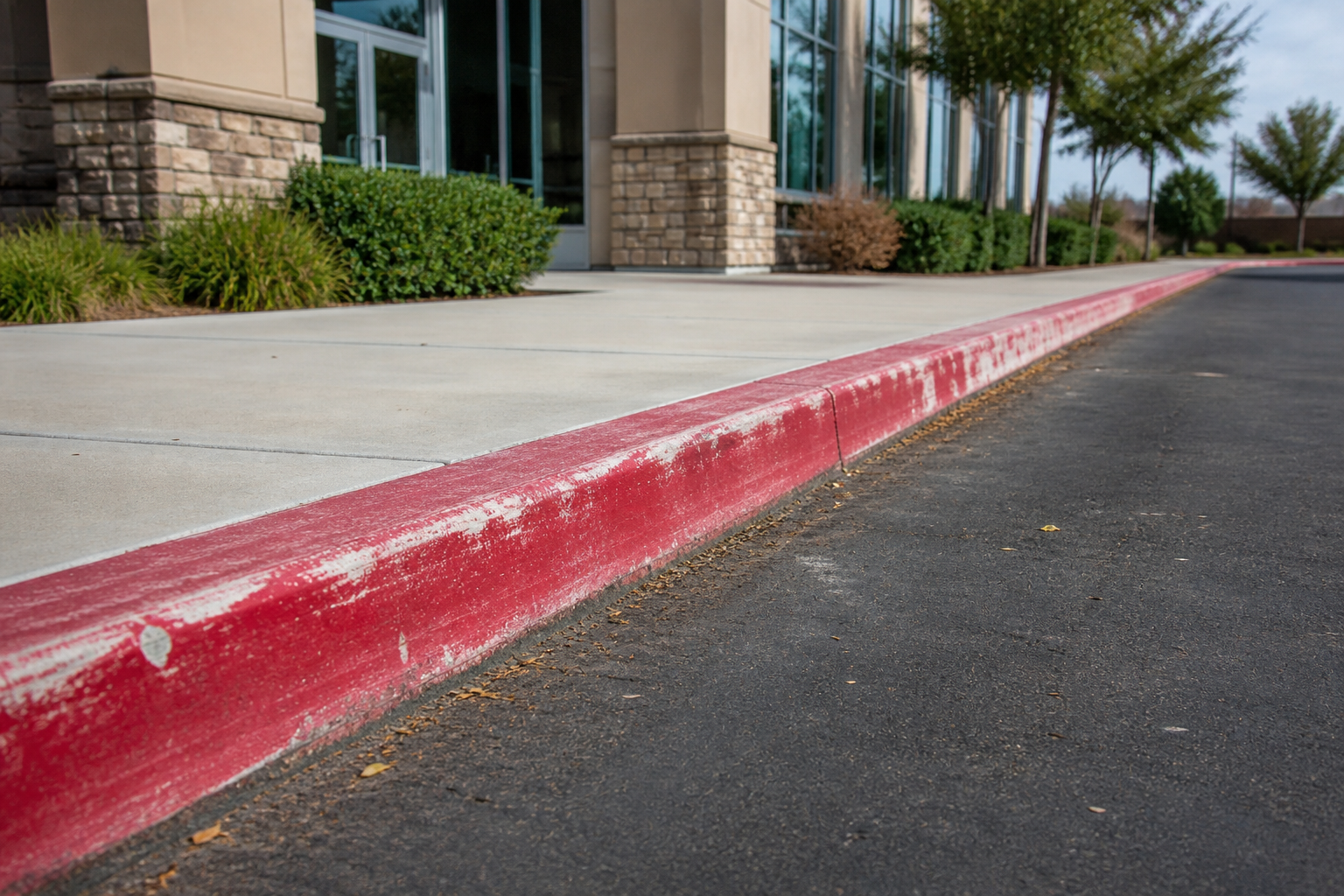
The Red Paint Isn’t the Whole Story
A property manager walks the lot after a fire marshal’s visit and finds the citation notice taped to the front door again. The curb looks red enough from a distance, but up close the edges have chalked out, the lettering is half gone, and the no-parking zone blends into the rest of the asphalt after dark. This happens more often than most building owners expect, and the usual response is to grab a can of red spray paint and touch things up without asking why the marking failed in the first place.
The common assumption is that fire lane marking is a cosmetic task, something handled the same way as a parking stripe refresh. That mindset treats red curb paint as decoration rather than a life-safety marking system with its own material requirements. Standard traffic paint wears differently depending on surface prep, traffic volume, and regional weather, and a fire lane painted with the wrong formulation can lose legibility within a single season. Property owners often don’t learn this until a reinspection flags the same violation they thought they’d already fixed.
Surface Prep and Paint Chemistry Decide How Long the Lane Lasts
The lots that keep their fire lane markings legible year after year tend to share a few unglamorous traits. The asphalt or concrete gets cleaned and sometimes etched before paint goes down, oil residue and loose debris are removed, and the contractor uses a traffic-grade paint rated for the specific surface rather than whatever is available at the local hardware store. Reflective additives matter too, since a fire lane that disappears at night during an emergency response defeats the purpose of marking it at all.
Lettering placement and spacing also get overlooked more than people realize. Fire codes generally specify how fire lane text should read, how often it should repeat along the curb, and what color combinations are acceptable, and local fire marshals enforce these details with real inspections rather than vague guidelines. A lane that’s technically painted but spaced incorrectly, or missing required wording like “No Parking Fire Lane,” can still draw a citation even though the color is right. Getting this part correct the first time saves a property owner from repeat visits and repeat costs.
Matching the Marking Plan to Local Fire Code Requirements
Every jurisdiction in Utah interprets fire lane requirements a little differently, which is part of why a generic national template doesn’t always hold up under local inspection. Some cities require specific curb heights for lettering, others dictate the exact shade of red, and fire districts vary on how far markings need to extend around a building’s perimeter. A contractor who has worked directly with regional fire marshals tends to know these variations before the first coat goes down, which avoids the back-and-forth of a failed inspection and a second visit. This is where experienced crews doing fire lane striping work make a practical difference, since they’ve already mapped out what each local authority expects rather than guessing from a single statewide code book.
Accessibility requirements intersect with fire lane planning more than most property owners anticipate, particularly around van-accessible spaces and the access aisles next to them. The ADA.gov accessibility compliance resources outline how striping, signage, and curb markings need to coexist near accessible parking without blocking required clearances, and a fire lane plan that ignores these overlaps can create two separate compliance problems instead of solving one. Coordinating both sets of requirements during the same striping project tends to be more efficient than treating them as unrelated line items.
Once the layout is approved, the actual application schedule matters almost as much as the paint itself. Lots with heavy truck traffic or harsh winter plowing need more frequent touch-ups, and scheduling that work before the paint has visibly failed keeps a property ahead of inspection cycles instead of reacting to citations. Building owners who treat fire lane upkeep as a seasonal maintenance item rather than a one-time project tend to spend less overall, since small touch-ups cost far less than a full repaint after years of neglect. Working with a crew that documents past striping work also makes future inspections faster, because there’s a clear record showing when lines were last refreshed and to what standard.