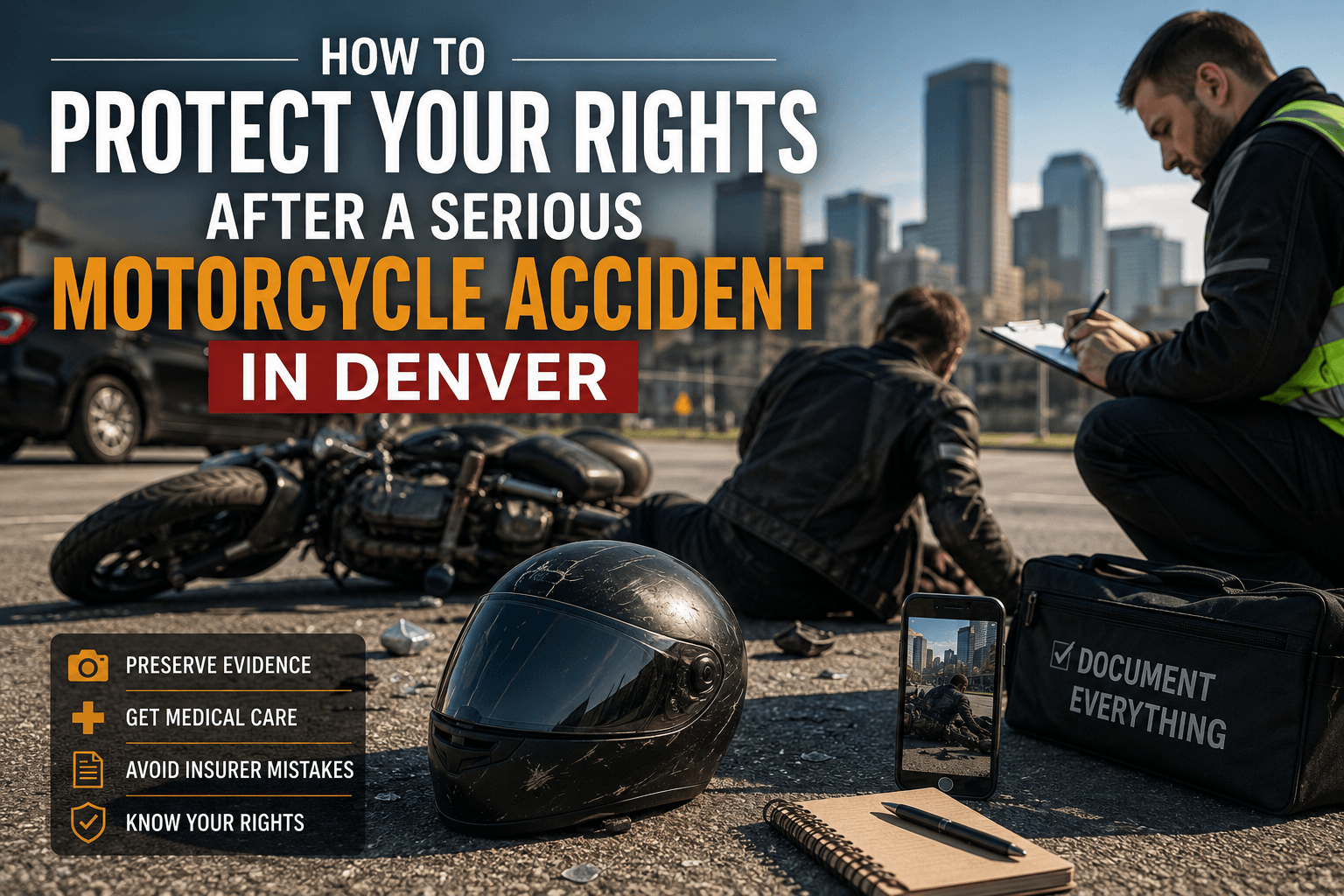
Protecting your rights after a serious motorcycle accident in Denver starts much earlier than most riders expect. It begins before the insurer finishes its first call, before the motorcycle is repaired, and often before the rider fully understands how bad the injuries may become. In Colorado, motorcycle claims carry unusually high stakes. The state recorded 165 motorcycle fatalities in 2024, the highest total on record, and motorcycles accounted for roughly 24 percent of traffic deaths despite being only a small share of registered vehicles (Anderson Hemmat; Boesen Law). Advocates Denver motorcycle accident attorneys can make a critical difference after a serious crash by preserving key evidence, documenting the medical timeline, and preventing the insurer from defining the rider’s story before all the facts are known.
Protect your rights first by preserving the story of the crash
A serious motorcycle claim often turns on details that disappear quickly. Where the bike landed, what lane positions looked like, whether the other driver turned across the rider’s path, what visibility conditions existed, and how the helmet, gear, and motorcycle absorbed impact can all shape liability. Once the scene is cleared and the bike is moved, some of that evidence becomes much harder to recover.
That is why the first protection step is practical rather than legal: preserve what happened. Photos, video, witness names, nearby businesses with cameras, visible injuries, damage patterns, and road conditions all matter. In motorcycle cases, the helmet, jacket, gloves, and bike condition can become part of the proof. Those items should be kept, not casually thrown away or repaired without documentation.
Protect your rights with immediate and consistent medical care
The second major protection step is medical. Serious motorcycle injuries often involve fractures, head trauma, shoulder damage, road rash complications, soft-tissue injuries, or symptoms that worsen over time. Riders sometimes delay care because they are in shock, focused on the bike, or hoping the pain will fade. That delay can hurt both recovery and the claim.
Medical treatment creates the timeline tying the crash to the injuries. Emergency records, imaging, follow-up visits, therapy notes, and specialist recommendations all show how the harm developed. If treatment starts late or becomes inconsistent, the insurer gets room to argue that the injuries were minor, unrelated, or exaggerated. Prompt care protects health, and it also protects credibility.
Protect your rights by avoiding statements that can be reused later
Serious motorcycle claims often face bias from the beginning. Riders are frequently assumed to have been speeding, weaving, or taking unusual risk even when another driver caused the collision. That means casual comments can do more damage than people realize. An apology, a guess about speed, or a recorded statement given too early may later be framed as proof the rider contributed to the crash.
Protecting your rights means being careful before discussing blame in detail. Basic cooperation with police and medical responders is one thing. Giving the insurer a polished version of events before the evidence and injury picture are clear is something else. In Colorado’s comparative negligence system, fault allocation directly affects compensation, so early statements matter.
Protect your rights by taking insurer contact seriously
Insurance companies often sound routine at the start. They ask for a statement, a release, or a quick discussion about settling the property-damage side. What they rarely say directly is that early contact helps them build the first internal version of the claim. If that version is built around limited treatment, uncertain fault, and a rider who “seemed okay,” it can depress value long before serious negotiations begin.
This is one reason rights protection is really leverage protection. The stronger the file becomes before the insurer settles into a low number, the harder it is for the carrier to treat the rider like just another fast-moving claim. That does not require theatrics. It requires discipline and timing.
Protect your rights by documenting all losses, not just the visible ones
A serious motorcycle accident claim usually involves more than emergency care and bike damage. Lost income, reduced work capacity, transportation problems, follow-up medical costs, prescription expenses, and the practical effect of pain on normal routines can all become part of the damages picture. Serious injuries may also involve long recovery periods or permanent limits that are not obvious in the first week.
Those rights are easier to protect when the losses are tracked early. Save receipts, appointment records, employer communications, pay records, mileage, and written notes about daily limitations. A claim built from specifics is much harder to minimize than one built from general frustration after the fact.
Protect your rights before evidence and memory start drifting
Timing matters in motorcycle cases for the same reason it matters in other serious injury claims: evidence fades. Witnesses get harder to reach. Surveillance footage may be overwritten. Vehicles are repaired or totaled. The rider’s own memory becomes less precise as treatment takes over. Waiting does not make the claim clearer. It usually makes the proof thinner.
This does not mean every serious motorcycle accident must turn into immediate litigation. It means riders should act like the case matters from the start. In Denver, where insurers process high volumes of crash claims, a thin file is easier to undervalue than a documented one.
Protect your rights by understanding how fault rules affect value
Colorado’s modified comparative negligence rule makes rights protection especially important for riders. If the insurer can assign a larger share of fault to the motorcyclist, compensation drops with every percentage point and can disappear entirely once the threshold is reached. That creates a built-in incentive for the defense to focus on speed, lane position, visibility, or rider conduct as early as possible.
That is why preserving proof is not optional in a serious motorcycle case. A rider’s rights are best protected when scene evidence, medical records, and witness support are strong enough to keep the insurer from winning the blame argument by default.
Protect your rights by getting legal structure before the claim hardens
Serious motorcycle claims are rarely helped by drifting. They usually improve when someone is actively controlling the evidence, treatment timeline, and communication strategy before the carrier hardens its position. That is where experienced legal help matters. The goal is not simply filing paperwork. The goal is keeping the claim focused on proof instead of stereotype, delay, and incomplete facts.
So how do you protect your rights after a serious motorcycle accident in Denver? Start with emergency care and scene preservation. Keep the helmet, gear, and bike condition documented. Be careful with fault discussions. Track every loss. Treat early insurer contact as important. In a Colorado motorcycle claim, those steps often do more to preserve value than any late-stage argument ever will.