A tanzania safari in 2026 runs anywhere from $200 to over $1,500 per person per day, and that enormous range confuses almost everyone planning their first trip. The good news is the spread isn’t random. It comes down to a small number of clear factors, and once you understand them, you can spot a fair quote from an inflated one in minutes.
The Four Pricing Tiers
Budget camping safaris run roughly $200 to $350 per person per day. You’ll share a vehicle with five to seven other travelers, sleep in basic camping or guesthouses outside the parks, and get simple meals. The wildlife is the same wildlife everyone sees, but comfort and schedule flexibility are limited.
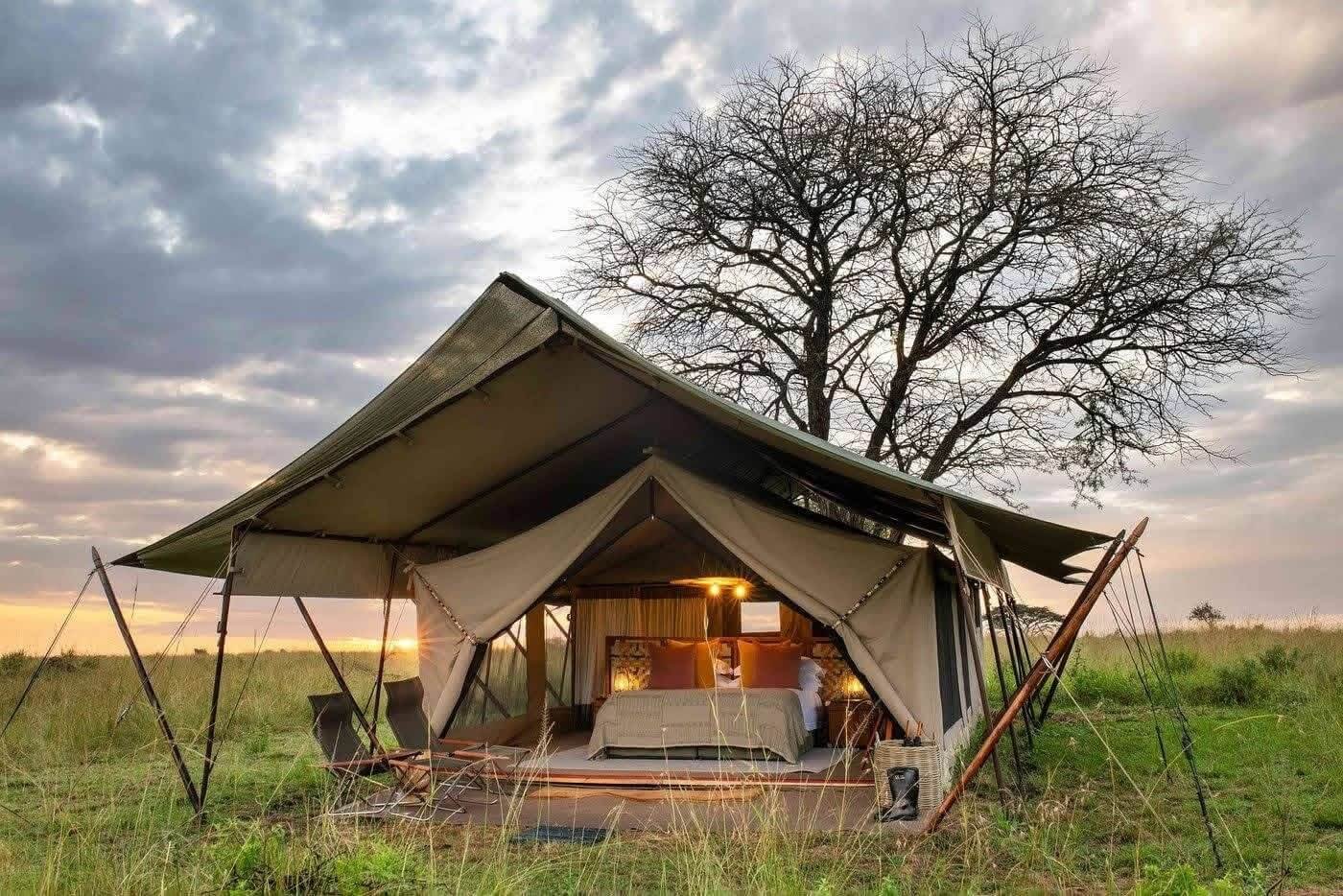
Mid-range safaris, the most popular tier for first-timers, run $350 to $600 per person per day. This is usually where you get a private vehicle and guide rather than a shared one, which is the single biggest jump in experience quality between budget and mid-range. Accommodation moves to permanent tented camps or solid lodges.
Luxury safaris run $600 to $1,200 per person per day, often including fly-in transfers between parks instead of long road transfers, premium tented camps or lodges, and more personalized service.
Ultra-luxury pushes past $1,200 and can exceed $2,000 to $3,000 per person per day for the most exclusive private camps and bespoke itineraries.
Where the Money Actually Goes
National park entry fees are a fixed cost every operator pays the same rate for, set by the Tanzania National Parks Authority (TANAPA) for parks like Serengeti and Tarangire, and separately by the Ngorongoro Conservation Area Authority (NCAA) for the crater area. These fees typically run $70 to $83 per person per day and make up 25 to 35 percent of your total safari cost. They are non-negotiable and identical whether you book with a small local operator or a large international agency.
The Ngorongoro Crater has one fee that surprises a lot of travelers: a $295 per-vehicle descent fee to drive down into the caldera itself, on top of the standard NCAA entry fee. Split across a couple, that’s nearly $150 per person added to a single day. Split across a group of four, it drops to around $74 per person, which is one of the clearest examples of why group size changes your per-person cost so dramatically.
Beyond park fees, your daily rate covers the vehicle and fuel, your driver-guide’s services, accommodation at whichever tier you choose, three meals a day, drinking water, and government taxes. What it typically excludes: international flights, your Tanzania visa (around $50 to $100 depending on nationality), travel insurance, alcohol, optional extras like a hot air balloon safari (roughly $550 to $600 per person), and tips for your guide and camp staff.
Why Two Quotes for the “Same” Safari Can Differ by Thousands
The biggest lever isn’t the lodge, it’s whether you’re sharing a vehicle on a fixed group departure or traveling privately with your own guide. A private vehicle costing $200 to $300 a day works out to $33 to $50 per person split six ways, but $100 to $150 per person for just two travelers. That single decision can swing your total cost more than any accommodation upgrade.
The other major factor is who you’re booking through. Booking platforms and marketplaces add real value by solving discoverability, but they typically mark up the ground operator’s price by 15 to 25 percent. On a $4,000 safari, that’s $600 to $1,000 going to the platform rather than your actual trip. Booking directly with the operator running the vehicles on the ground removes that layer entirely.
A Real Example: 7-Day Northern Circuit
For a private, mid-range, 7-day Northern Circuit safari covering Tarangire, Serengeti, and Ngorongoro, expect a total cost in the range of $2,800 to $4,900 per person, all-inclusive of park fees, accommodation, meals, guide, and vehicle. The same itinerary at the budget tier runs $1,800 to $3,500, and at the luxury tier, $5,500 to $10,500 or more.
How to Read a Quote Properly
A trustworthy quote itemizes every line: TANAPA fees, NCAA fees if Ngorongoro is included, vehicle and fuel, your named driver-guide, accommodation tier by name (not just “comfortable camp”), meals, and taxes, with exclusions clearly listed separately. If a quote arrives as one lump number with no breakdown, ask for the itemized version. Vague pricing is usually where markup hides.
Roy Safaris has operated as a ground-level tanzania safari company in Arusha since 1989, which means quotes for your tanzania safari come direct from the operator actually running your vehicle and guide, without a booking platform’s commission sitting between you and your trip. For a cost this variable, working with the people who actually know where every dollar goes makes the difference between a fair price and an inflated one.